

Migraine Without Aura: Symptoms, Duration and How It Differs From Migraine With Aura
You get a throbbing pain on one side of your head. Light feels too bright, your stomach is off, and walking to the kitchen makes it worse. But you never saw zigzag lines or flashing lights beforehand, so you wonder whether this is "really" a migraine without aura, or something else.
It very likely can be. Migraine without aura is the most common form of migraine, and it simply means the attack starts without the visual or sensory warning signs that some people get. This guide explains the symptoms, how long an attack lasts and how it differs from migraine with aura. It is one of the topics in our Migraine symptoms section.
In short
- Migraine without aura is the most common type: about 70 to 75% of people with migraine do not have aura, according to the American Migraine Foundation.
- The headache phase of a migraine usually lasts between 4 and 72 hours, according to Cleveland Clinic.
- The main difference with migraine with aura is the warning phase: aura symptoms (such as zigzag lines or tingling) should not last longer than an hour, according to the NHS, and they are absent in migraine without aura.
- Only a healthcare professional can diagnose your type of migraine, so see one if your attacks are frequent, new or changing.
What is migraine without aura?
Migraine without aura is a migraine attack with a headache phase but no aura phase before it. It used to be called "common migraine", and Cleveland Clinic describes it as the more common type, where the headache comes without an aura.
An aura is a short-lived set of symptoms, usually visual, that appears before or alongside the headache. If you want the full picture, read our guide to migraine with aura. If a word in this article is unfamiliar, our migraine glossary explains it simply.
Having no aura does not make the attack milder. The pain can be just as intense and disabling. It only means the warning phase is missing.
What are the symptoms of migraine without aura?
The typical symptoms are a moderate to severe headache, often throbbing and on one side, together with sensitivity to light and sound and sometimes nausea. Cleveland Clinic lists pain on one side, a pulsing or pounding feel, moderate or severe intensity, and pain that gets worse with basic activity.
Alongside the pain, you may notice:
- Sensitivity to light and sound, and sometimes to smells or touch.
- Nausea and vomiting.
- A need to lie down in a dark, quiet room, because moving makes the pain worse.
Mayo Clinic notes that the pain is usually on one side of the head but can occur on both sides. So "it is not one-sided" does not rule migraine out.
The phases before and after the headache
An attack without aura can still have other phases. Mayo Clinic says that 40 to 60% of people with migraine have a "prodrome", which is a set of subtle changes one or two days before the attack. These can include food cravings, drowsiness, irritability, constipation or diarrhea.
After the headache fades, there is often a "postdrome". Mayo Clinic describes feeling drained, confused and worn out for up to a day, and Cleveland Clinic gives a range of a few hours up to 48 hours. This is why you can feel flattened the day after, even when the pain has gone.
Not everyone goes through every phase. Mayo Clinic is clear that attacks do not always include all four stages.
How long does migraine without aura last?
An attack of migraine without aura typically lasts from 4 hours up to 72 hours when untreated. This is the range Cleveland Clinic gives for the headache phase, and it is also part of the standard diagnostic criteria used by doctors, as laid out in the international classification (ICHD-3).
Remember that the full attack is longer than the headache alone, because the phases before and after add time. We go into this in detail in How Long Does a Migraine Last?.
The NHS advises asking for an urgent GP appointment or calling NHS 111 if a migraine has lasted longer than 72 hours. Cleveland Clinic gives similar advice: contact a healthcare provider or go to the emergency room if symptoms last longer than 72 hours.
Migraine without aura vs migraine with aura: what is different?
The key difference is that migraine with aura has a temporary warning phase and migraine without aura does not. The headache itself can feel very similar in both types.
| Migraine without aura | Migraine with aura | |
|---|---|---|
| Warning phase | None | Aura before or with the headache |
| How common | About 70 to 75% of people with migraine | About a third of people with migraine |
| Typical signs | Throbbing pain, light and sound sensitivity, nausea | The same, plus visual, sensory or speech changes |
| Headache length | 4 to 72 hours | 4 to 72 hours |
Many people have both types at different times, so your attacks may not always follow the same pattern.
What does an aura feel like?
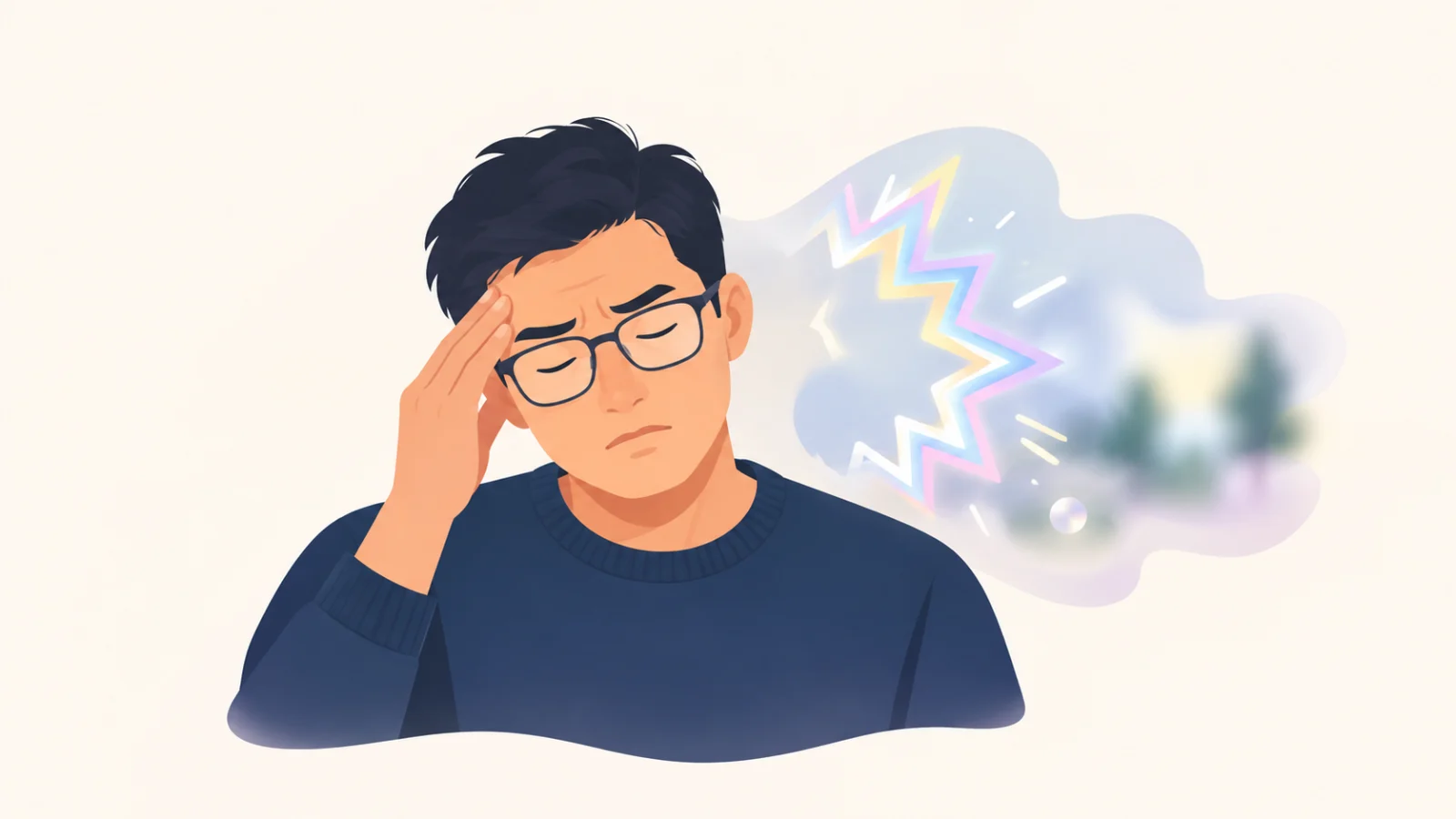
An aura is a group of temporary symptoms such as zigzag lines, flashing lights, tingling or numbness, or trouble speaking. The NHS lists problems with your sight, pins and needles, dizziness and difficulty speaking, and says aura symptoms should not last longer than an hour.
If you want to understand these signs, see Migraine With Aura: Understanding the Warning Signs. For the visual kind, our ophthalmic migraine guide explains what is going on.
Why the difference matters beyond the symptoms
Researchers see differences between the two types that go past the symptoms. A review of the research notes that migraine with aura has different heritability and a stronger association with some conditions, including stroke, than migraine without aura. It also suggests that the two types may respond differently to some treatments.
Stroke risk deserves a calm perspective. The American Headache Society reports that migraine with aura is linked to a higher risk of ischemic stroke, although the absolute risk is small in healthy women who do not smoke. Current guidelines restrict combined hormonal contraceptives in migraine with aura, but not in migraine without aura. If you use or are thinking about hormonal contraception, ask your doctor which type of migraine you have and what it means for you.
How do I know if it is migraine and not a "normal" headache?
A migraine is more than a bad headache: it usually brings sensitivity to light and sound, nausea and pain that worsens when you move. A headache that is dull, mild and not made worse by activity may be something else. Our article Migraine vs Headache goes through the differences step by step.
Doctors do not use a scan to confirm migraine without aura. The NHS explains that there is no specific test, and a GP looks for a pattern of recurring headaches with the associated symptoms. A formal diagnosis usually rests on repeated attacks that fit the criteria, including at least five attacks of the right length and features.
If you have a headache almost every day, that is a different situation, and our article on daily headaches can help you make sense of it. For wider context, see Migraine by the Numbers.
When should I see a doctor, and when is it an emergency?
See a doctor if your migraines are frequent, new, getting worse or disrupting your life. The NHS suggests keeping a diary for a few weeks, noting the date, time, what you were doing, how long the attack lasted, your symptoms and any medicines you took. Women can also note when their period starts, because this can help identify triggers.
Get urgent help in these situations, according to the NHS:
- Ask for an urgent GP appointment or call NHS 111 if a migraine lasts longer than 72 hours, aura symptoms last longer than an hour, or you are pregnant or have just had a baby.
- Call 999 if you have a sudden, extremely painful headache, problems speaking or remembering things, loss of vision, double vision, confusion, a seizure, a very high temperature with signs of meningitis, or weakness on one side of the body or face.
These are not meant to scare you. They are a reminder that a headache that feels completely different from your usual ones deserves attention. In the US, the same logic applies: a sudden, severe or unusual headache is a reason to seek emergency care.
What can I do right now?
You can start by learning your own pattern, which is useful for you and for your doctor. The NHS lists common triggers such as your period, stress, tiredness, skipping meals and too much caffeine, though triggers vary a lot from person to person.
Here are a few simple steps:
- Note each attack: date, start time, duration, intensity and any warning signs, so you can tell whether you have aura or not.
- Look for patterns with sleep, stress, meals and your cycle. Our guide on how to identify your migraine triggers shows you how, and Migraine and Periods covers the cycle link.
- Talk to your doctor about treatment. Do not change or stop medicines on your own.
- Rest in a dark, quiet room during an attack if you can. Our article on relieving migraine without medication has more ideas.
Migraine without aura is common, real and manageable with the right support. Knowing which type you have is a good first step, and it makes your conversation with a doctor much easier.
Frequently asked questions
Is migraine without aura a "real" migraine?
Yes. It is the most common type of migraine, affecting about 70 to 75% of people with migraine according to the American Migraine Foundation. Missing the aura simply means there is no warning phase before the headache.
Can I have both migraine with aura and without aura?
Yes, many people have both types at different times. Because the headache can feel the same, noting whether you had warning signs each time helps you and your doctor see your pattern.
Is migraine without aura more dangerous than migraine with aura?
No. If anything, research links migraine with aura to a stronger association with conditions such as stroke, although the absolute risk is small for most people. Both types are best managed with a healthcare professional.
Do the same triggers cause both types of migraine?
Triggers are personal and not tied to one type. The NHS lists stress, tiredness, skipped meals, caffeine and your period among common ones. Keeping a diary is the best way to find yours.
Can a migraine without aura turn into one with aura?
Some people have both over time, but a change in your usual pattern, especially new warning symptoms, is worth mentioning to your doctor. Do not try to work out the cause alone. A professional can check what is going on.
Sources
- Migraine Without Aura
- Cleveland Clinic logo
- www.nhs.uk
- Migraine - Diagnosis - NHS
- Migraine - NHS
- syc 20360201
- Differences in treatment response between migraine with aura and migraine without aura: lessons from clinical practice and RCTs
- table2 0333102420965146
- Migraine with Aura, Contraceptives and…
Written by Laurine Nicoletti, founder of Mellow, who has lived with migraine since she was 21. Learn more · How we write our articles
Related articles

Types of Migraine: A Simple Map of the Main Forms
Types of migraine explained simply: with aura, without aura, episodic, chronic, vestibular and rare forms, plus links to each detailed guide.

Menstrual Migraine: When Periods Trigger Migraine Attacks
Menstrual migraine explained: pure vs menstrually-related criteria, the estrogen drop behind attacks, and treatment options to discuss with your doctor.
Ophthalmic Migraine: A Complete Guide
Flashing lights, zigzag lines, blurred vision before the headache: ophthalmic migraine explained. Symptoms, causes, duration and when to worry.