
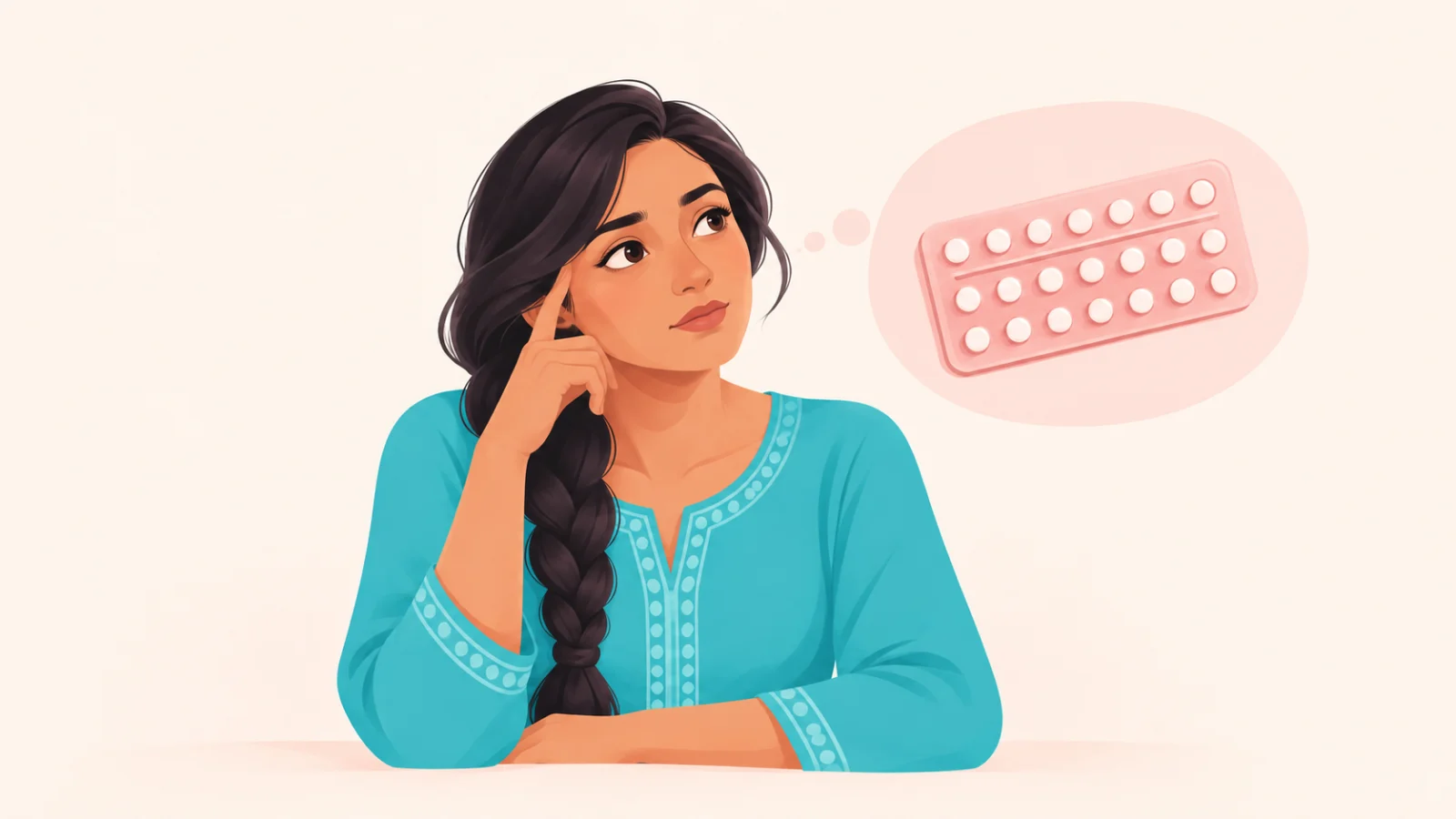
Birth Control and Migraine: What Studies Say and When to Talk to Your Doctor
You started the pill and your headaches seem different. Or you have had migraine since your teens and you are not sure whether the pill your friend takes would be safe for you. Or a doctor once said "no estrogen for you" and nobody really explained why.
Birth control and migraine have a complicated relationship, and the answer is rarely "always" or "never". For some people the pill makes attacks worse, for some it makes them calmer, and for others it changes nothing. This article walks through what the research shows, what is still uncertain, and what to ask at your appointment. It is part of our guide to preventing migraine, and it does not replace advice from a doctor who knows your history.
In short
- Hormonal birth control can make migraine better, worse or no different, and researchers cannot yet predict which for a given person, according to the American Migraine Foundation.
- If you have migraine with aura, the NHS advises against combined hormonal contraception (pills containing estrogen) because of a small but real increase in stroke risk.
- Progestogen-only methods (the mini-pill, implant, injection or hormonal IUS) are considered safe for people with aura, and non-hormonal options exist too, according to the Migraine Trust.
- For migraine without aura, the combined pill may be an option depending on your other stroke risk factors, so it is worth a proper conversation with your doctor.
Can birth control cause or worsen migraine?
Yes, it can for some people, but it can also help others. The American Migraine Foundation notes that estrogen, whether from birth control or hormone replacement therapy, can have an unpredictable effect: it may reduce how often you get migraine, trigger attacks, or do nothing at all.
Mayo Clinic describes the same mixed picture: oral contraceptives may make migraine worse in some people, while others have fewer attacks while taking them. So a bad experience on one pill does not mean all hormonal methods will go the same way, and a good experience on one does not guarantee the next will be the same.
If your attacks change after you start a new pill, that is useful information. Write down when it happened, how often attacks come and how strong they are, so your doctor can see the pattern rather than relying on memory.
Why do hormones influence migraine?
What seems to matter most is not how much estrogen you have, but how fast it changes. Mayo Clinic explains that these swings happen with the menstrual cycle, with pregnancy, with menopause, and when taking oral contraceptives.
This is why many people notice attacks around their period, when estrogen drops. If you want the full picture, we explain it in Migraine and Periods: Why Your Cycle Triggers Attacks and in Menstrual Migraine: When Periods Trigger Migraine Attacks.
A standard combined pill has a pill-free or placebo week, and estrogen levels can dip during it. The American Migraine Foundation says that taking a combined pill or vaginal ring continuously, with no placebo week, can be a preventive strategy for people whose attacks are tied to hormone shifts, because it avoids those drops. This is something to discuss with your doctor, not something to try on your own.
Birth control and migraine with aura: why the caution?
Combined hormonal contraception is not recommended if you have migraine with aura, because both are linked to a higher risk of ischaemic stroke. An ischaemic stroke happens when a blood clot blocks blood flow to part of the brain. The NHS explains that migraine with aura and combined hormonal contraceptives are each linked to a very small increased risk of stroke, and that having both makes the risk bigger.
Estrogen can make blood clot more easily, which is the main reason it is the focus of concern. Rush University reports that guidelines from organisations including the World Health Organization and the US Centers for Disease Control and Prevention treat migraine with aura as a reason not to use estrogen-containing pills.
Keep this in proportion. The Migraine Trust stresses that a higher risk does not mean you will definitely have a stroke, and that the overall risk of stroke in migraine is considered low. The NHS calls the extra risk small, but important enough to be considered unnecessary when safer options exist.
If you are not sure whether your symptoms count as aura (flashing lights, blind spots, tingling or speech difficulty before or during a headache), our guide to migraine with aura explains the warning signs. And if you ever get sudden or unusual neurological symptoms, treat that as urgent and seek medical help.
What about migraine without aura?
If you have migraine without aura, combined birth control is usually not ruled out, but it depends on your other risk factors. The NHS says you may be able to take combined hormonal contraception, depending on factors such as smoking, obesity, high blood pressure, and a family history of heart disease or stroke. If you have any of these, you may be advised against it.
The Cleveland Clinic summarises that current guidelines restrict combined contraceptives with aura but not without aura. Mayo Clinic adds that if you smoke or have aura, you should talk with a healthcare professional before starting any estrogen-containing birth control.
Not sure which type you have? Our article on migraine without aura explains how the two differ.
Which options exist if the combined pill is not right for you?
Progestogen-only methods and non-hormonal contraception are the usual alternatives. The NHS says that if you have migraine with aura, progestogen-only contraceptives such as the mini-pill, implant, injection or hormonal IUS are safe to use, and you can also choose non-hormonal methods such as the copper IUD.
A progestogen-only method is not automatically a migraine treatment, though. A review in The Journal of Headache and Pain found preliminary evidence from headache diaries that one type of progestogen-only pill (desogestrel) may improve migraine, with fewer migraine days. These were early findings, so they are not a promise.
The European Headache Federation and the European Society of Contraception said in a consensus statement that progestogen-only options appear to carry less risk, but that the quality of the data is poor and more research is needed. Your doctor can help you weigh these methods against your own needs, such as how regular your cycle is, whether you want a method you do not have to remember daily, and any side effects you have had.
What is still uncertain?
Several important questions are still open, and good studies are missing. Being honest about this helps you ask better questions.
- Modern low-dose pills. The Cleveland Clinic points out that the stroke concern comes from data from the 1960s and 1970s, when pills contained much higher doses of estrogen. The American Migraine Foundation adds that absolute risk is very low in healthy young women with no other risk factors and relates mostly to estrogen dose, but more research is needed in people with aura who use today's lower-dose pills.
- How much your own risk factors matter. The same foundation says the extra risk may depend more on individual health factors than on the pill alone. That is exactly why a one-size-fits-all answer does not work.
- Whether progestogen-only methods help migraine. Safety looks reassuring, but evidence that they reduce attacks is still limited and, according to Migraine Canada, inconclusive.
- Why the same pill affects people so differently. There is no test that tells you in advance whether a given pill will help or worsen your attacks.
Because of this, guidelines are cautious and doctors may vary a little in how they apply them. The American Migraine Foundation notes that most headache specialists are comfortable with people with migraine taking hormonal birth control in many situations, while being much more careful when aura is involved.
When should you talk to your doctor, and what should you ask?
Talk to your doctor before starting birth control, and sooner rather than later if your migraine changes while on it. Tell them about your migraine every time you see a doctor, pharmacist or sexual health clinic about contraception, as the Migraine Trust recommends. If you currently take a combined pill and notice aura symptoms for the first time, the NHS advises speaking to a GP about other forms of contraception.
Also speak to a doctor if:
- your attacks become more frequent or more intense after starting or changing a pill;
- you start to have aura you have never had before;
- you smoke, have high blood pressure, or have a family history of stroke or heart disease, and want to use an estrogen-containing method.
Questions you could bring to the appointment:
- Based on my history, do I have migraine with aura, and does that change which methods suit me?
- Do my other health factors (smoking, blood pressure, family history) affect my options?
- Is a progestogen-only or non-hormonal method a better fit for me?
- If my attacks follow my period, would a continuous regimen be something to consider?
- How long should I give a new method before judging its effect on my migraine?
- Which symptoms should make me contact you or seek urgent care?
If you want to understand your wider patterns first, how to identify your migraine triggers can help you separate hormonal effects from sleep, stress or food.
In practice: what to take away
The right answer depends on your type of migraine, your other risk factors and how your body responds, and your doctor is the right person to weigh them. A few simple steps help:
- Note whether you get aura, and describe it as precisely as you can.
- Track attacks for a few weeks before and after any change of method.
- Mention smoking, blood pressure and family history openly.
- Do not stop or switch a prescribed method on your own: ask first.
None of this is about fear. It is about having the information you need to make a choice that fits your life.
Frequently asked questions
Can the pill give you migraine for the first time?
It can happen, but research does not give a clear rule. The American Migraine Foundation says estrogen may reduce migraine, trigger attacks or have no effect. If new headaches appear after you start a pill, note the timing and tell your doctor.
Is the mini-pill safe if I have migraine with aura?
According to the NHS, progestogen-only contraceptives such as the mini-pill are safe to take if you have migraine with aura. Which one suits you is a decision to make with a doctor or nurse.
Do I have to stop the pill if I get aura?
Do not stop on your own without advice. The NHS says that if you take a combined pill and have aura symptoms, you should talk to a GP about alternative contraception, so you can switch to a safe method without a gap in protection.
Can birth control help menstrual migraine?
For some people, yes. Mayo Clinic notes that doctors may recommend combined hormonal contraceptives for menstrual migraine because they steady estrogen levels. It is not guaranteed to work, and it is not suitable for everyone, especially with aura.
Sources
- Migraine - Complications - NHS
- Who can take the combined pill - NHS
- Oral Contraceptives and Migraine
- Hormonal & Menstrual Migraine
- Does Birth Control Increase Stroke Risk in Women With Migraine?
- Estrogen fluctuations and migraines: The menstrual connection - Mayo Clinic Press
- Choosing a birth control pill - Mayo Clinic
- Combined Hormonal Contraceptives and Migraine: An Update on the Evidence
- Migraine and contraception
- pmc.ncbi.nlm.nih.gov
- Hormonal contraceptives and risk of ischemic stroke in women with migraine: a consensus statement from the European Headache Federation (EHF) and the European Society of Contraception and Reproductive Health (ESC) - PMC
- why birth control and migraines aura dont mix
- Migraine Canada Logo
Written by Laurine Nicoletti, founder of Mellow, who has lived with migraine since she was 21. Learn more · How we write our articles
Related articles
Migraine and Screens: Is Blue Light Really to Blame?
What the studies really say about screens, blue light, filter glasses, and migraine. A method to identify if your screens are actually triggering your attacks.
Weekend Migraines: Why Attacks Hit When You Finally Relax
Let-down effect, cortisol drop, sleeping in, caffeine withdrawal: why your migraines hit on weekends or vacations, and how to prevent them.
Migraine and Sleep: Why You Wake Up With a Headache
Sleep deprivation, oversleeping, apnea, insomnia: how sleep and migraine affect each other, and how to adjust your sleep habits to reduce attacks.